


I would like to acknowledge the support of Antonia Voigt and Tianqi Lu, whose feedback on earlier drafts of this article was very helpful. An edited version was published by BERA in the Spring 2026 issue of their magazine Research Intelligence.
For nearly thirty years I have worked as a freelance transferable skills trainer for companies and universities across the United Kingdom (UK) and beyond. In that time, I have often watched students wrestle with substantive case studies designed to hone their communication, collaboration, and leadership skills. The re-enactment of, say, the negotiation of an international treaty provides the perfect setting: create diverse teams, give them conflicting objectives, and ask them to resolve the dilemma. Key learning emerges during the debrief as they reflect on how they planned, persuaded, and managed themselves through the task, with any parallels to their working lives revealing themselves.
Embedding that learning requires celebration, but it used to frustrate me when the debrief’s ‘reveal’ of what actually happened left students somewhat dispirited, as their outcomes rarely matched recorded history. Seeing their enthusiasm drop like this on several occasions struck me as a problem needing a solution. Inspired by an immersive training experience I worked on in 2008, prompted by an article by Rebecca Attwood on the challenges of skills training, and helped by a chance introduction, I conceived a course for doctoral researchers called Authentity – a portmanteau of Author and Entity. Authentity was designed to combine the complexity of a case study, the student-friendly skill of videography, and a real-world problem without a known solution.
The immersive training experience that inspired Authentity had shown me how an activity that begins as a role play can become real and create authentic and memorable emotional responses. The client was an insurance company seeking to rebuild trust with its customers following the global financial crisis that began in 2007, and over ten months 14,000 staff attended the three-hour event around the UK. Working in teams, staff responded to phone calls from six customers to process their property damage and personal injury claims. But later, when those customers, played convincingly by talented actors, arrived in person in front of staff members to hand-deliver their frustration regarding the slow and evasive service they had received over the phone, the atmosphere changed instantly. In that moment, theory gave way to reality. Something that had begun as a procedural exercise became emotionally charged and unpredictable, and the feedback later showed that this had made all the difference.
Based on this experience, I realised a cutting-edge, real-world project could give students the same sense of unpredictability and ownership, letting them tackle problems without a known solution. Delivered annually for eight years, Authentity offered doctoral researchers the chance to tackle complex social and technological issues from waste and extreme weather to risk, transport, and energy. In the course’s first year, the topic was provided by Richard Noble’s Bloodhound SSC project, an attempt to set a new land speed record by developing a car capable of exceeding 1,000 miles per hour.
From my experience as a tutor on numerous GRADschools, a residential training course for doctoral students in the early to mid-noughties in the UK, I knew that the success of Authentity would depend on the quality of the relationships that the students could forge. Hence, I designed a three-day residential course that combined theory and practical application, and progressed stepwise from self-awareness to interpersonal skills to problem-solving in teams.
Having delivered numerous courses for over ten years up to this point, I was used to doctoral researchers arriving as what trainers call ‘prisoners’ or ‘passengers’; resentful, passive, waiting for it to be over. For Authentity I wanted something different: a cohort of active and willing participants. To encourage that, I decided against a formal invitation. Instead, I held informal meetings with students from three universities in Bristol, London and Manchester in advance to seek their commitment and to invite their influence on the course design. The approach worked, and on a beautiful morning in the Derbyshire dales, four colleagues and I welcomed twenty-eight fully engaged doctoral students, each ready to step into the experience I had created.
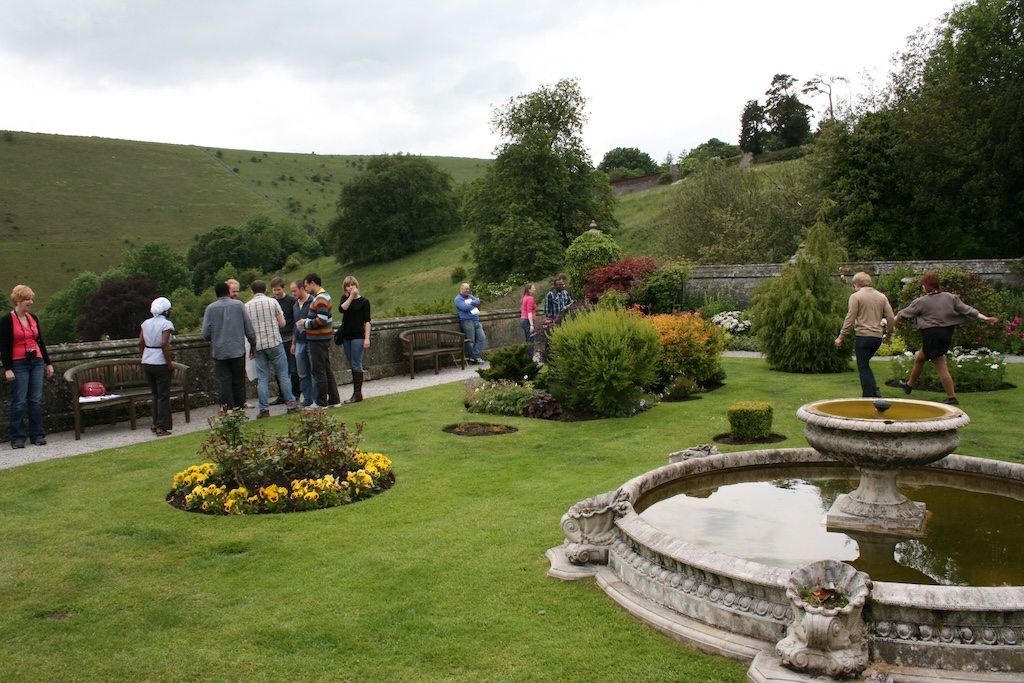
Over three days we met, got to know each other, and tackled the course. The structured sessions were focused and effective. But it was during the unstructured project time that had been deliberately left for the students to organise themselves where something special happened. Tasked with exploring how the Bloodhound SSC project could solve some of its public relations challenges – its cost in times of austerity, its gluttonous fuel consumption in a world going green, and its need to engage the public constructively – the students applied themselves creatively and exhaustively. It remains the only occasion in my career as a facilitator when I found myself checking in on participants and urging them to pause for food, rest, or sleep.
When it came time to present their work to a panel of academic and Bloodhound staff, they delivered it both as a traditional formal presentation and through videos featuring creative stop-motion animation, humour and Vox pop interviews with members of the public – and all brimming with originality and palpable pride.
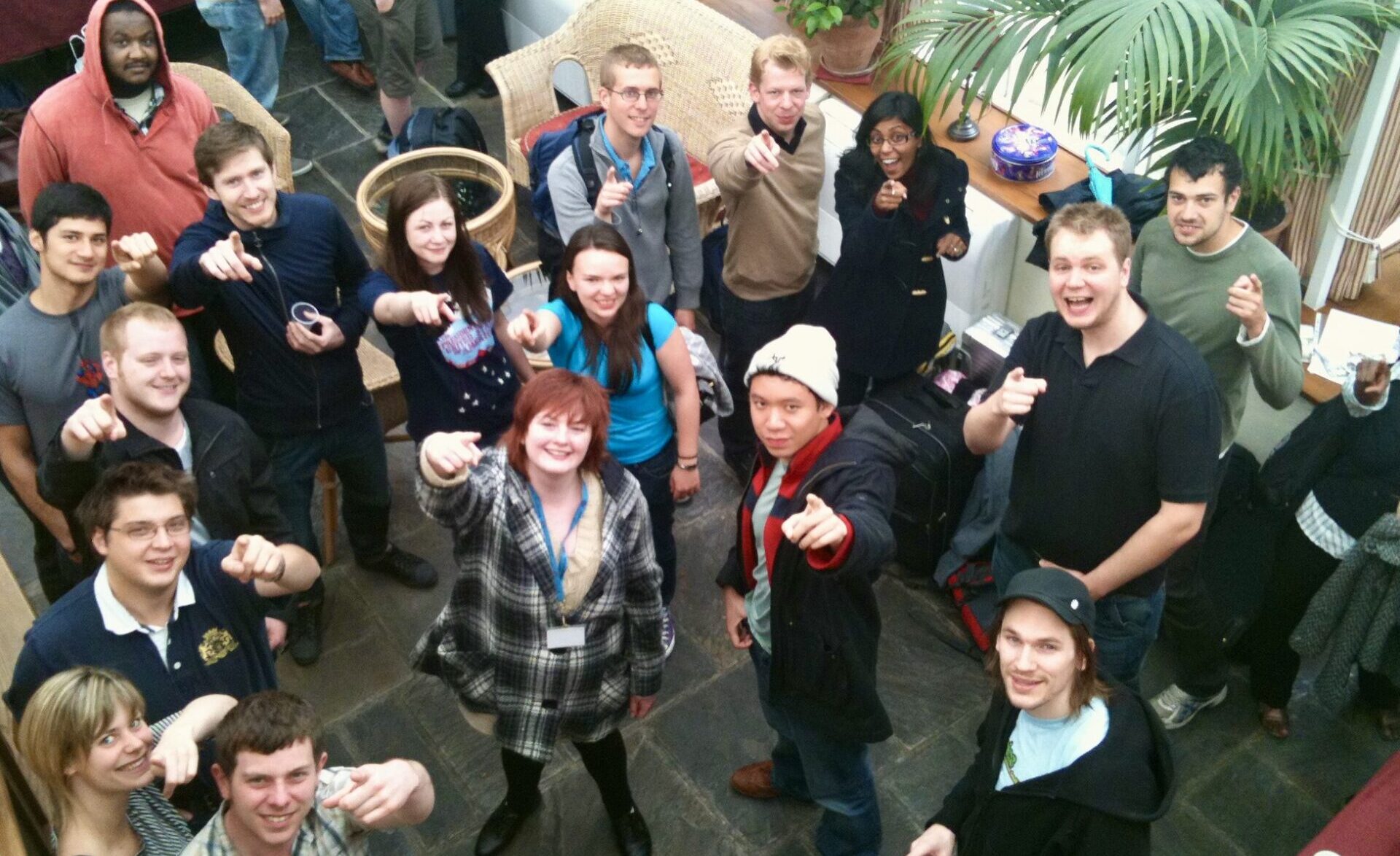
One student later reflected that they had been offered ‘startlingly pertinent feedback on their demeanour, personality, behaviour and their influence on those around them. Authentity taught not what kind of behaviour to adopt, but instead how to recognise and understand it in oneself and others.’ (Sutton, 2020, pp. 28-29). In addition to the course being shortlisted in the category for ‘Outstanding Support for Early Career Researchers’ at the Times Higher Education Awards in November 2012, Bloodhound SSC acknowledged ‘the need to mitigate the project’s environmental impact and develop a greener strategy’. Authentity proved one thing beyond doubt: transferable skills are best learned through immersion, and best remembered when the learner owns the outcome.
Reference: Sutton, A. P. (2020) Rethinking the PhD. Imperial College London. https://spiral.imperial.ac.uk/server/api/core/bitstreams/b1622108-a493-43e3-ac1a-43a14deb29b9/content
Authentity, and any success it enjoyed between 2011 and 2018, would not have been possible without the initial risk taken by Professor Adrian P. Sutton, Emeritus Professor at Imperial College and Emeritus Fellow of Linacre College, Oxford; the support and involvement of Dan Johns, then Programme Architect at Bloodhound SSC; and the generous guidance and infectious optimism of the late Julian Walsh.